Image Credit
Stanford Stadium
A Guide to Stanford Stadium
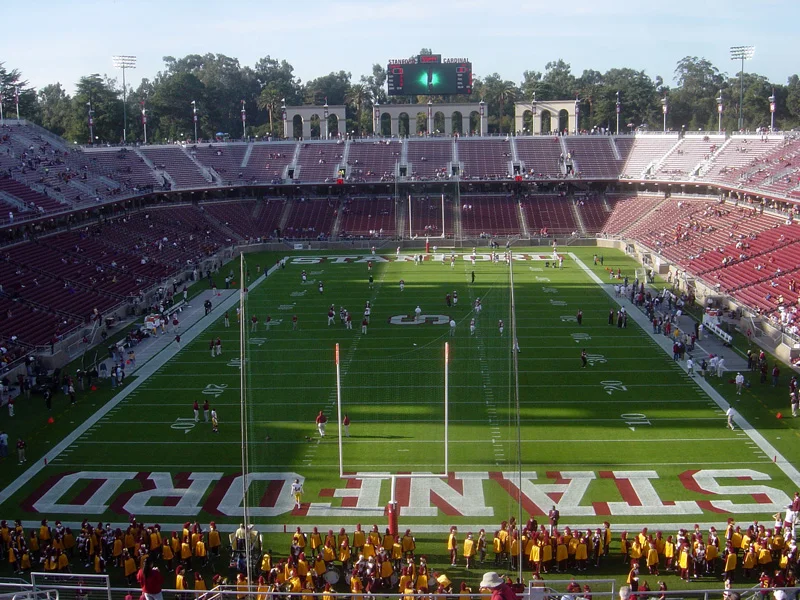
Stanford Stadium combines nearly a century of major-event history with one of college football’s most comfortable modern bowls. Rebuilt inside the footprint of the original 1921 earthwork venue, the 50,424-seat stadium puts chairbacks close to natural grass. Eucalyptus groves, bicycles, shaded tailgates and the irreverent Stanford band create a relaxed Bay Area atmosphere around a site that has hosted Olympic soccer and a Super Bowl.
Getting to Stanford Stadium
The stadium is at 625 Nelson Road, east of Stanford's academic core and just west of El Camino Real. Palo Alto traffic gathers at Embarcadero Road, University Avenue, Oregon Expressway and Page Mill Road, while event controls can change normal campus turns. Use the parking permit's directions instead of navigating to the stadium pin.
Driving & Parking
- US 101 from San Francisco or San JoseEmbarcadero Road is the direct approach from Exit 402, continuing west toward El Camino Real and campus. It becomes heavily congested near kickoff.
- Interstate 280Sand Hill Road approaches from the west and avoids central Palo Alto, but the final campus streets still narrow around event lots.
- Prepaid parkingStanford sells football parking by zone. Galvez, Lasuen, Track House, Sunken Diamond, El Camino Grove and other athletics-district areas may be assigned by permit and donor level.
- Lot openingDesignated football lots generally open five hours before kickoff; Lot 2 and El Camino Grove open at 6 a.m. Always follow the event-specific permit.
- Tailgate spaceA parking credential covers the marked stall, not adjacent roads, sidewalks or another space. Larger catered setups should use Stanford's reserved hospitality options.
- Accessible parkingBuy or arrange an accessible credential in advance and display the government-issued placard or plate associated with the guest. Inventory closest to the gates is limited.
- Neighborhood parkingPalo Alto residential streets use permits, time limits and event restrictions. A citation or long postgame walk can erase any savings.
- Postgame departurePolice may meter traffic and mandate turns. Wait at the tailgate or follow the directed route rather than crossing queues to reach a preferred freeway.
Public Transit
- CaltrainPalo Alto station on University Avenue is the practical rail stop for visitors arriving from San Francisco, Millbrae, San Jose or the Peninsula.
- Station walkThe stadium is roughly a mile from Palo Alto station. The pleasant route crosses El Camino Real and follows campus paths, but allow 20–30 minutes in the crowd.
- Marguerite shuttleStanford's free shuttle network links downtown Palo Alto, the rail station and campus. Football service and routing can vary, so consult the current game-day map.
- Bicycle accessFlat terrain and extensive bike infrastructure make cycling unusually realistic. Use a designated rack and bring a lock; bicycles cannot enter the venue.
- Airport travelCaltrain connects with BART at Millbrae for San Francisco International Airport. San Jose airport requires a local bus or rideshare connection.
- Late gamesCheck the last Caltrain departure before entering. Weekend frequencies and construction schedules can make an unplanned postgame wait lengthy.
Rideshare (Uber/Lyft)
- Use the published zoneStanford adjusts rideshare locations with traffic plans and construction. Select the football event in the app and follow signs rather than choosing Nelson Road.
- Do not request at a gateNelson, Galvez and Lasuen carry pedestrians and controlled vehicle traffic; drivers may be unable to reach an improvised pin.
- Postgame strategyWalk toward El Camino Real, Town & Country Village or downtown Palo Alto before requesting once pedestrian conditions permit.
- Rail combinationCaltrain to Palo Alto plus the walk or shuttle is usually more predictable than a long rideshare through US 101 traffic.
Pregame Festivities
Stanford tailgating is a grove-and-lawn experience rather than a single asphalt scene. Alumni groups gather beneath trees around the athletics complex, students move through campus by bike and the public Fan Fest offers a reliable destination for visitors without a private invitation. The mood is friendly and cerebral, with a streak of deliberate weirdness once the band appears.
Tailgating
- El Camino GroveThe wooded area east of the stadium is the classic Stanford setting, prized for shade, picnic tables and easy access from El Camino Real.
- Chuck Taylor GroveNear the stadium's east side, this donor-oriented tailgate area honors Stanford's championship football coach and offers a polished alumni scene.
- Ueland FieldStanford's reserved tailgate provider can supply tents, furnishings, food and beverage packages here for groups that want a turnkey setup.
- Football Fan FestThe Hammer Throw area between Cobb Track and Nelson Road opens three hours before kickoff with sponsor activations, games and family entertainment, then closes 30 minutes before kickoff.
- Parking-lot tailgatesTailgating is permitted in designated football lots, but setups must stay within assigned space and cannot block fire lanes or pedestrian routes.
- Early arrivalMost lots open five hours before kickoff. Arriving before the final two hours makes food setup easier and leaves time to see the central campus.
- September weatherAfternoon heat can linger even when San Francisco is cool. Bring water and sun protection; temperatures drop quickly at night.
- CleanupStanford's park-like grounds are central to the experience. Use the provided waste and recycling points, extinguish cooking equipment and leave the grove intact.
Pregame Bars & Restaurants
- Gott's RoadsideAt Town & Country Village across El Camino Real, Gott's serves burgers, fries, salads and shakes in a casual patio setting convenient to the stadium.
- The downtown diner offers breakfasts, burgers and milkshakes, making it useful for an early kickoff or a late postgame meal.
- A lively Ramona Street restaurant with Cajun-influenced plates, cocktails and a courtyard; reserve ahead on football weekends.
- This downtown Palo Alto spot serves upscale Mexican dishes and tequila drinks in a dramatic two-level room.
- California comfort food, local beer and a central University Avenue location suit groups arriving by Caltrain.
- The Stanford locations are good for Venezuelan coffee, arepas and a quick breakfast while touring campus.
- A student-oriented Tresidder Union stop for burgers, pizza and beer near the academic core, about a 15-minute walk from the stadium.
- The Alpine InnThe historic beer garden in Portola Valley is a worthy Friday stop, but it requires a drive and is not a practical last-minute pregame destination.
Gameday Traditions
- The Stanford TreeThe band's unofficial mascot dances in a new handmade costume each year. It is intentionally strange, intensely visible and separate from Stanford's official cardinal color identity.
- LSJUMBThe Leland Stanford Junior University Marching Band favors rock arrangements, scattered formations and satire over military precision. Visitors should expect irreverence.
- “All Right Now”The band's signature Free arrangement follows big moments and has served as Stanford's de facto fight anthem for decades.
- “Come Join the Band”Stanford's official fight song dates to the early 1900s and connects the current scramble band to the university's traditional repertoire.
- The DolliesFive student dancers perform choreographed routines with the band in distinctive red outfits during rallies and games.
- Big GameStanford and California have played since 1892. The winner claims the Stanford Axe, and rivalry week saturates campus with cardinal-versus-blue symbolism.
- “Fear the Tree”The rallying phrase appears on shirts, signs and social posts, turning the odd mascot into a concise home-field warning.
- Postgame alma materPlayers, band and remaining supporters gather after the final whistle, a quieter close that visitors should allow before exiting.
Monuments & Features
- Nested bowlThe 2006 stadium sits inside the excavated footprint of the 1921 structure, preserving the historic location while bringing every seat closer to football.
- All-chairback seatingEvery permanent seat is an individual chair, an uncommon comfort at a major college venue of this size.
- Natural-grass fieldThe closely trimmed surface reinforces Stanford's traditional look and contrasts with many West Coast multipurpose facilities.
- Home of ChampionsStanford's athletics identity celebrates its extraordinary NCAA championship total throughout the district and nearby Hall of Fame displays.
- Hoover TowerThe 285-foot campus landmark rises west of the stadium and helps orient visitors walking between the athletics district and Main Quad.
- Memorial Church and Main QuadRichardsonian Romanesque arcades and the mosaic-fronted church make the academic center an essential pregame detour.
- 2026 ArchwayThe renovated social area adds Archway Grill, Backfield Social and cabana hospitality without changing the bowl's compact form.
- Programmable lightingNew LED stadium lighting supports introductions and in-game effects while improving energy efficiency and field illumination.
History & Notable Moments
- First Big Game (1921)California defeated Stanford 42–7 before 62,740 in the original stadium's opening event, only four months after construction began.
- Hoover nomination (1928)Herbert Hoover accepted the Republican presidential nomination before a stadium crowd, making the venue part of national political history.
- USA–USSR track meet (1962)A celebrated Cold War dual meet drew an enormous audience and confirmed the old bowl's versatility.
- Olympic soccer (1984)Stanford hosted matches during the Los Angeles Games, one of several international soccer assignments at the venue.
- Super Bowl XIX (1985)Joe Montana and the San Francisco 49ers defeated Miami 38–16 in the only Super Bowl staged at a college campus venue in Northern California.
- World Cups (1994 and 1999)Men's and women's FIFA World Cup matches brought international crowds to the Farm.
- Final old-bowl game (2005)Demolition began minutes after Notre Dame's victory, starting an extraordinarily fast reconstruction.
- Rebuilt debut (2006)Stanford opened the current stadium against Navy less than ten months after work began.
Seating & Sections
The current stadium has a continuous lower bowl and compact upper decks along the sidelines. Its 50,424 seats feel considerably closer to the action than the shallow 85,000-seat predecessor. Seat backs make long games comfortable, while the open rim preserves views of trees and sky.
Sun and temperature drive the purchase decision. The west side receives afternoon shade first; the east side looks toward the press facilities but can remain exposed. Lower rows offer immediacy, though midfield elevation in the upper deck provides the clearest tactical view.
- West sidelineThe home side and press-box shadow make this the preferred area for shade during afternoon games.
- East sidelineExcellent views face the home bench and premium tower, but direct sun can be intense through much of the afternoon.
- Lower bowlChairbacks close to the field deliver the rebuilt stadium's greatest advantage; higher lower rows balance proximity with sightlines.
- Upper sidelinesThese seats provide a clean view of formations, surrounding trees and the entire field without an extreme climb.
- Red Zone student sectionStanford students bring the most standing and band-adjacent energy; seat expectations differ from quiet chairback areas.
- Director's LevelApproximately 400 premium seats pair elevated midfield views with indoor hospitality.
- Field boxes and Archway cabanasSmall-group products favor social space and close field access; 2026 cabanas seat up to six and include food, soft drinks and premium parking.
- Sky Deck Lounge and suitesSeven suites and the social deck provide the stadium's most exclusive hospitality and broadest elevated views.
Concessions
Stanford operates a cashless system with more than 200 points of sale. The 2026 changes add quicker grab-and-go formats, while the permissive outside-food policy lets families bring a meal that complies with container rules.
- Archway GrillNew for 2026, this anchor stand expands the east-side social area's hot-food service.
- Backfield SocialThe new gathering space emphasizes drinks and a less formal place to meet without leaving the venue.
- Grab-and-go marketsFaster cashless stations reduce waits for packaged snacks, canned beverages and basic game-day items.
- Stadium classicsHot dogs, burgers, pizza, nachos, popcorn, pretzels and sweets are distributed around both levels.
- Beer and wineAlcohol is available at designated stands to guests of legal age; carry identification and observe the posted cutoff.
- Outside foodPersonal food is generally permitted, but whole fruits and vegetables are barred as potential projectiles; cut fruit must be appropriately packed.
- WaterA sealed or empty soft-sided bottle no larger than 20 ounces is permitted. Hard, glass and metal bottles are prohibited.
- Mobile paymentBring a card or phone wallet. Improved cellular service should help, but saved payment credentials remain wise.
Bag Policy
- Each guest may bring one clear plastic, vinyl or PVC bag no larger than 12 by 6 by 12 inches.
- One small clutch no larger than 4.5 by 6.5 inches may accompany the clear bag.
- Medical and diaper bags receive exceptions after additional inspection at the gate.
- Backpacks, opaque totes, camera cases, binocular cases, coolers and other noncompliant bags are prohibited.
- Stanford offers complimentary bag check at Sunken Diamond near Gate 10, beginning about 30 minutes before gates open and ending one hour after the game.
- Soft-sided water bottles must be factory sealed or empty and no larger than 20 ounces; hard, glass and metal containers are prohibited.
- Open umbrellas, portable chairs, strollers and seat cushions wider than 18 inches are prohibited, as are weapons and outside alcohol.
- OpenGate walk-through screening operates at all entrances. Mobile tickets must be saved to the phone wallet, and Stanford prohibits re-entry for all 2026 football games.
Upcoming Games
1Stadium Information
Notable Events
Suggested Places
Recommended places to visit near this stadium