Image Credit
Tiger Stadium (LA)
A Guide to Tiger Stadium
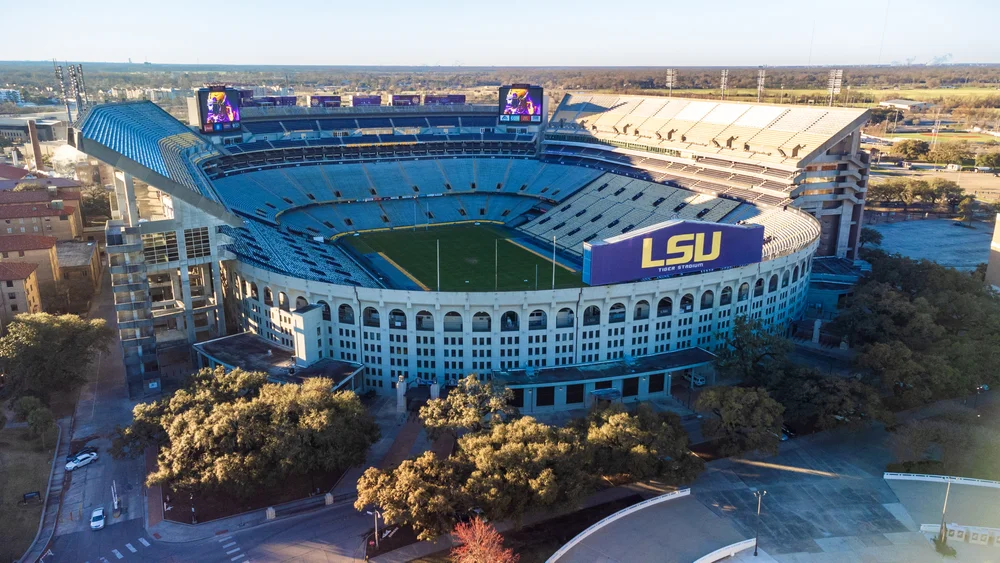
Tiger Stadium in Baton Rouge is college football at its most sensory: 102,321 fans, Louisiana food beneath live oaks, the Golden Band from Tigerland descending Victory Hill and a Saturday-night roar that gives “Death Valley” its meaning. The 1924 venue has grown into a towering bowl without losing its arched walls or intimacy, making LSU game day an all-day immersion in Louisiana culture and SEC intensity.
Getting to Tiger Stadium
Tiger Stadium sits between North, South and West Stadium drives on the LSU campus, southwest of downtown Baton Rouge. Interstate 10 is the regional artery, with Nicholson Drive, Highland Road, River Road, Stanford Avenue and Dalrymple Drive feeding different parking zones. Navigate to the lot, not the stadium.
Driving & Parking
- DrivingI-10 traffic through Baton Rouge is heavy even on ordinary weekends. Use the approach printed for the parking zone and expect law enforcement to prevent cross-campus turns. River Road can be useful for western lots, while Nicholson and Highland serve southern and eastern approaches.
- ParkingReserved passes are digital and most lots open at 7 a.m. The Old Front Nine became paid public parking in 2025, opening at 7 a.m. from Gourrier Drive and charging $50 by card on a first-come basis; confirm the current rate.
- ParkingVehicles may occupy only marked spaces. Parking on medians, Nicholson Drive shoulders, oak root zones, railroad margins or landscaped ground is prohibited and towing is active.
- ParkingFree accessible parking is in the rear of Lot 406 behind Tiger Park, entered from Gourrier Avenue. A valid state credential is required and spaces are first-come. The shuttle drops in Lot 101 and returns from Nicholson Gateway.
- ParkingPaid accessible parking in Nicholson Garage requires advance purchase. Oversized vehicles, buses and limousines use designated Lot 412 with a game-specific permit.
- ParkingNorth, South and West Stadium drives close on gameday. Skip Bertman and Nicholson segments also close after the game so the first wave of pedestrians can clear.
Public Transit
- LSU’s primary public shuttle is the accessible service from Lot 406. It runs throughout the game and until approximately 90 minutes afterward; weekly details take priority.
- Local businesses sometimes operate ticketed gameday buses from Baton Rouge gathering points. Confirm the exact game, return deadline and whether parking at the origin is included.
- Baton Rouge’s ordinary bus system is not a dependable direct stadium solution under football traffic controls. A charter or designated shuttle is preferable.
- The PMAC opens five hours before kickoff with free seating, restrooms and games on its videoboard. Though not transportation, it is a useful air-conditioned waiting point after a shuttle arrival.
Rideshare (Uber/Lyft)
- LSU designates Lot 406 for rideshare drop-off and pickup. Drivers may not use restricted interior roads or the stadium’s four-corner pedestrian zone.
- The lot is a significant walk from the stadium. Allow time before kickoff and save its location for the return, when landmarks look different in the dark.
- Surge pricing and outbound congestion are substantial after night games. Waiting at a tailgate or Nicholson Gateway until the first wave clears can improve the match.
- Verify the plate and driver. Do not walk along the live railroad tracks or use Nicholson Drive shoulders as an improvised pickup point.
Pregame Festivities
The LSU pregame has enough content for an entire afternoon. Visit Mike, eat on campus, see the band in the PMAC, then move to Victory Hill. General gates open two hours before kickoff and clubs open three hours before.
Tailgating
- Setup is permitted after 5 p.m. Friday. Do not place equipment early, and keep every fire lane, sidewalk and parking space open.
- The Parade Ground, Old Front Nine, Touchdown Village areas and lawns around the PMAC all develop distinct communities. The Parade Ground is student-heavy; areas south and west of the stadium feature larger family and RV setups.
- LSU tailgating is food-centered. Gumbo, jambalaya, boudin, sausage, seafood and game meat appear beside standard barbecue. Accept hospitality graciously, ask before entering a private setup and offer something in return.
- Tents may sit beneath the oaks, but vehicles and trailers cannot enter mulch or root zones. Never stake or dump hot liquid where it can damage trees.
- Generators, grills and cooking equipment must follow fire rules and remain safely ventilated. DJs and live bands are restricted under the updated policy; check the current sound limits.
- Bag trash and use recycling containers. LSU distributes bags because the extraordinary scale of the tailgate creates an equally extraordinary cleanup.
- Turnkey tailgates are available through official operators. Confirm whether parking, food and beverages are included rather than assuming a tent package covers everything.
Pregame Bars & Restaurants
- Just outside the North Gates, this LSU institution serves Louisiana seafood, po’boys, gumbo and a deep beer list. It is extremely busy on gameday, so arrive early or visit Friday.
- Founded near LSU by former walk-ons, it combines televisions, burgers, seafood and Louisiana dishes. The Burbank location requires a short ride from the stadium core.
- A 24-hour-style diner near the North Gates known for breakfast, omelets and hash browns. It is ideal for an early start or late recovery meal.
- A popular off-campus restaurant for crawfish étouffée, fried seafood, oysters and fish. Use it for Friday dinner because it is not walkable from Tiger Stadium.
- A local favorite for savory pies, comfort food and inventive desserts. It sits north of campus and is best incorporated outside the peak traffic window.
- Near downtown beneath the Mississippi River Bridge, Pastime serves pizza and po’boys in an old Baton Rouge setting. It pairs well with a downtown stay.
- The Original Raising Cane’sThe first location on Highland Road near campus connects the fast-growing chain to LSU. Expect chicken fingers, fries and a line.
- This small under-the-overpass bar and grill near campus is known for burgers and po’boys. Space is tight and the atmosphere is local rather than polished.
Gameday Traditions
- Victory HillAbout two hours before kickoff, the team walks down the hill on North Stadium Drive. The band, Golden Girls and color guard follow in a separate procession, creating the day’s defining public ritual.
- Golden Band from TigerlandThe band’s approach to the stadium and pregame “Hold That Tiger” fanfare are essential. Its four-note “Pregame Salute” triggers an immediate roar.
- Mike the TigerLSU’s live Bengal-Siberian tiger resides in a habitat across from the stadium. Visit during daylight and respect his ability to choose whether to appear; he is no longer forced into the stadium.
- Saturday Night in Death ValleyNight kickoff is itself a tradition, rooted in LSU’s first night game in 1931. The humidity drops, the lights intensify and the crowd has spent the full day building energy.
- “Geaux Tigers”Louisiana spelling appears everywhere, alongside the “L-S-U” chant and “Tiger Bait” directed at visitors. The latter is usually theatrical rather than hostile.
- Neck and band standardsThe crowd responds loudly to familiar band phrases and student-section additions. Some unofficial lyrics are not family-friendly.
- Victory Gold archesAfter a win, the north-end arches glow gold, turning the historic facade into a postgame marker.
Monuments & Features
- Dormitory roomsThe 1936 north-end horseshoe incorporated rooms beneath the stands for roughly 1,500 students. The old dorms are no longer conventional housing but remain the stadium’s most unusual architectural story.
- Mike’s habitatThe landscaped, 15,000-square-foot tiger environment includes water, shade and viewing areas and is a major pregame landmark.
- Billy Cannon statueOutside the stadium, the 1959 Heisman winner is depicted on his famous Halloween punt return against Ole Miss.
- Championship and player monumentsPlazas recognize LSU’s national titles, All-Americans and major figures, giving fans several photo stops around the bowl.
- Historic archesThe Victorian Italian Renaissance-inspired exterior, particularly at the north end, survives beneath later decks and glows after victories.
- Five-yard numeralsLSU traditionally numbers the field in five-yard increments rather than only every ten, producing a distinctive visual pattern.
- Three centennial videoboardsInstalled for 2024 with 11 ribbon boards and programmable lights, the boards modernize presentation without erasing the old bowl.
History & Notable Moments
- Tiger Stadium opened with about 12,000 seats in 1924, and LSU beat Tulane 13–0 in the first game on November 27.
- The first night game came in 1931. The north-end dormitory expansion in 1936 created a 46,000-seat horseshoe, and the south end closed the bowl in 1953.
- Billy Cannon’s 89-yard punt return on Halloween night in 1959 delivered a 7–3 victory over Ole Miss and remains LSU’s signature individual play.
- A last-second Bert Jones touchdown pass beat Ole Miss 17–16 in 1972, after a finish whose timing remains debated by rival fans.
- The crowd reaction to Tommy Hodson’s late touchdown against Auburn in 1988 registered on a campus seismograph, producing the “Earthquake Game.”
- LSU upset No. 1 Florida 28–21 in the 1997 “Bring Back the Magic” game, helping restore the stadium’s modern reputation.
- Upper decks arrived through several projects. A $78 million south-end expansion completed in 2014 added suites, clubs and general seating, setting capacity at 102,321.
- LSU celebrated the stadium’s centennial in 2024 with new video, ribbon and lighting systems.
Seating & Sections
Tiger Stadium’s lower bowl is close, loud and old-fashioned; upper decks offer panoramic views but require long ramps and can feel detached from ground-level circulation. West-side seats gain shade first, while east-side patrons face afternoon sun. End-zone upper levels are very high.
- Lower sidelinesMid-height rows provide the best balance. Very low seats can be blocked by benches, while old concrete geometry creates narrow space in some rows.
- End zonesThe north end places fans near the historic arches and band; the expanded south end offers modern concourses and premium areas.
- Student sectionStudents and band occupy the north end and stand almost continuously. Nearby seats receive maximum noise and colorful unofficial chants.
- Visitor seatingVisiting allocations are commonly high in the southeast area with selected lower inventory. Consult the current map for exact sections.
- Premium seatingTiger Den suites, Stadium Club South and West, club seats and Skyline Club vary from open-air premium chairs to climate-controlled hospitality and inclusive food.
- AccessibilityADA seating, elevators and companion positions exist across several levels. Arrange exchanges ahead and use Lot 406 shuttle service for the approach.
Concessions
Tiger Stadium combines standard fare with Louisiana flavors. Locations vary sharply by level, so consult the 2025 or current map and buy specialty food before climbing. Cards and mobile payment are safest even where other methods may appear.
- Louisiana specialtiesLook for jambalaya, alligator, boudin, sausage, Cajun nachos and rotating local concepts. Selection is not identical on every concourse.
- Core fareHot dogs, burgers, chicken, pizza, nachos, popcorn, candy and bottled drinks are widely available.
- Local brandsLSU regularly incorporates Baton Rouge and Louisiana restaurant partners; lineups and locations change annually.
- AlcoholBeer, wine and approved beverages are sold at designated stands. Identification, serving limits and the SEC cutoff apply.
- WaterOne factory-sealed water bottle of 32 ounces or less may enter. Use it strategically in early-season heat; other outside food and beverages are prohibited.
- Dietary needsAsk supervisors about ingredients and shared cooking surfaces. Contact guest services in advance for medical food requirements.
Bag Policy
- One clear tote smaller than 12 by 6 by 12 inches or one clear one-gallon freezer bag is allowed per person.
- A handheld clutch or wristlet smaller than 4.5 by 6.5 inches may accompany the clear bag. Diaper bags are not exempt.
- Approved medical exceptions require inspection. Contact LSU Guest Services before gameday when equipment or supplies cannot fit the standard policy.
- Camera bags, coolers, umbrellas, artificial noisemakers, poles, outside food and most drinks are prohibited. All persons and items are screened.
- There is no re-entry and no gate storage. Unattended items are removed and discarded, so take prohibited belongings back to the vehicle before joining the line.
Upcoming Games
2Stadium Information
Notable Events
Suggested Places
Recommended places to visit near this stadium